|
 Japan is a country where the old and new stand side by side with beautiful contrast. This tour lets you experience Japan's stunning countryside from the comfort of the Shinkansen bullet train, as well as relaxing in hot outdoor springs amongst leafy green canopy, admiring the views after scaling Mt Fuji, to exploring the temples, visiting the site of Hiroshima, to eating sushi and singing to bad Karaoke in the cities. This all encompassing tour offers the cultural highlights as well as those off the beaten track. Japan is a country where the old and new stand side by side with beautiful contrast. This tour lets you experience Japan's stunning countryside from the comfort of the Shinkansen bullet train, as well as relaxing in hot outdoor springs amongst leafy green canopy, admiring the views after scaling Mt Fuji, to exploring the temples, visiting the site of Hiroshima, to eating sushi and singing to bad Karaoke in the cities. This all encompassing tour offers the cultural highlights as well as those off the beaten track.
 • Day 1 to 2 Arrive Tokyo • Day 1 to 2 Arrive Tokyo
• Day 3 to 4 Takayama
• Day 5 to 6 Kyoto
• Day 7 to 8 Himeji - Nagasaki
• Day 9 to 10 Yufuin - Kyushu
• Day 11 Hiroshima - Miyajima
• Day 12 Toyko
• Day 13 Tour ends
• Accommodation:
* 12 nights in hotels (3 star) centrally located hotels and Ryokans (traditional Japanese Inn)
• Meals:
All breakfasts
• Excursions:
All excursions mentioned as per the itinerary
• Transport:
Shinkansen (bullet train - rail pass included in tour cost), private air-conditioned coach, taxi, on foot
• Group Size: Maximum 20
• Staff: Yellow Brick Road Tours tour leader, local guide
• International flights and departure taxes
• Domestic flight taxes if applicable
• Tips on included excursions, visas, travel insurance, personal items
• Pre & post tour accommodation
• Departure transfers
• Spending money - allow approximately US$40 - $50 per day to cover snacks, meals not included, drinks, souvenirs, laundry, tips etc.
• Optional excursions
Day 1 - Saturday, July 14, 2012
 • PLEASE NOTE: it is important you arrive on Day 1 in order to enable the Tour Leader to obtain your rail passes, and validate them to collect the train tickets on Day Two. • PLEASE NOTE: it is important you arrive on Day 1 in order to enable the Tour Leader to obtain your rail passes, and validate them to collect the train tickets on Day Two. • Tokyo is one of the most modern cities in the world, and the buzzing neon capital of Japan. However, on the flip side, Tokyo is a cross road where the leading electronics stores of Akihabara infringe upon the ornately decorated old Kubuki theatres. • Tokyo has a bustling gay scene and liberal views of homosexuality to boot.  • The city comprises of many areas such as Ginza which is full of department stores selling the latest fashions, there's the electronics of Akihabara, the strange fashions and youth hangouts of Harjuku, and Shinjuku, the fast paced night club area. • The city comprises of many areas such as Ginza which is full of department stores selling the latest fashions, there's the electronics of Akihabara, the strange fashions and youth hangouts of Harjuku, and Shinjuku, the fast paced night club area.
• However, if you delve under the surface, Tokyo is still very traditional as are its people. You will still see the ladies wearing kimonos around the Gion area. People visit temples before and after work to say prayers, and couples announce their wedding vows in traditional wedding gowns in the beautiful grounds around the Meiji Shrine.  • In spring, couples, families and friends sit beneath trees sipping sake admiring the cherry blossoms. Here you can admire traditional Kabuki performances or if fortunate enough, watch Sumo wrestlers throw each other out of the ring during one of the few 'Bashos' held each year. • In spring, couples, families and friends sit beneath trees sipping sake admiring the cherry blossoms. Here you can admire traditional Kabuki performances or if fortunate enough, watch Sumo wrestlers throw each other out of the ring during one of the few 'Bashos' held each year.
• Tonight, we head out for a group welcome dinner with the first chance of many to sample delicious Japanese food, and wash it down with a local beer or glass of Sake.
Day 2 - Sunday, July 15, 2012
 • This morning, your tour leader will validate your rail pass which you will use throughout your tour (please bring your passport). • This morning, your tour leader will validate your rail pass which you will use throughout your tour (please bring your passport).
NB: The rail pass cannot be replaced and individual passes will be costly if lost, this will be at your expense). •Following this, our orientation tour takes us to the Imperial Palace, which is generally considered to be the city centre, where you are briefed on the various areas of interest in town. •The Imperial Palace, home of the Emperor, is unfortunately not open to the public but can be viewed from a vantage point.  • A metro ride then takes us across town to Tokyo's major religious site, the Meiji Shrine located in a large park area. Although a reconstruction it exhibits all the original features of a Shinto Shrine. • A metro ride then takes us across town to Tokyo's major religious site, the Meiji Shrine located in a large park area. Although a reconstruction it exhibits all the original features of a Shinto Shrine.
• Other sights we visit are Ueno Park and Asakusa Temple. • We finish the sightseeing tour with a visit to Yoyogi Park which is a real experience on a Sunday afternoon. The rebellious (though strangely polite) youth display avant garde art, music, and various other forms of untraditional culture to keep you entertained.  • In the evening, you have the option to see a traditional Kabuki play. This is a larger than life play, of colour and sound and is taken very seriously by both the actors and audience alike. It can be seen as a whole show or simply act by act - a great way to spend an evening. • In the evening, you have the option to see a traditional Kabuki play. This is a larger than life play, of colour and sound and is taken very seriously by both the actors and audience alike. It can be seen as a whole show or simply act by act - a great way to spend an evening.
• If you have extra time in Tokyo, you may want to make a day trip to nearby Kamakura to see the Daibutsu (Great Buddha) which is cast in bronze and stands over 11 metres tall.
Day 3 - Monday, July 16, 2012
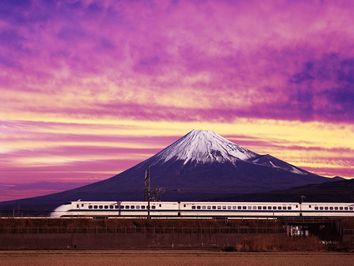
 • Our day starts early with an included visit to the Tsukiji fish market where you can witness the frantic bidding at the tuna auction. This is an amazing introduction to the realities of Tokyo life while the city still sleeps - not to be missed! • Our day starts early with an included visit to the Tsukiji fish market where you can witness the frantic bidding at the tuna auction. This is an amazing introduction to the realities of Tokyo life while the city still sleeps - not to be missed! •Later, we board the famous 'Bullet train' for the first time and maybe catch a glimpse of Mount Fuji before we disembark and journey into the Japan Alps, far from the modern life of Tokyo. • Why not pack a Japanese 'bento box' to eat during the journey before arriving in the late afternoon in Takayama.
Day 4 - Tuesday, July 17, 2012
 • Nestled in the Japan Alps, Takayama earned the nickname of 'Little Tokyo' because of its skilled craftspeople who built temples and house for the Emperors in Kyoto. • Nestled in the Japan Alps, Takayama earned the nickname of 'Little Tokyo' because of its skilled craftspeople who built temples and house for the Emperors in Kyoto.
• Takayama is home to many old wooden houses with unique design, built to withstand the harsh climate and terrain. • A full day to explore this beautiful landscape begins with a cycling orientation tour discovering traces of a feudal past, and thatched houses and rice fields.  • You can visit the houses at the Hida Folk Village, festival floats at Yatai Kaikan, or you can simply walk around the houses and stop for a cup of sake at one of the local breweries (there are many). • You can visit the houses at the Hida Folk Village, festival floats at Yatai Kaikan, or you can simply walk around the houses and stop for a cup of sake at one of the local breweries (there are many).
• For those feeling more energetic, there is the lovely forest walk past numerous small shrines.
Day 5 - Wednesday, July 18, 2012
 • We depart early for Kyoto, the former Imperial Capital of Japan and home of the country's most treasured remnants of Japanese imperial life. • We depart early for Kyoto, the former Imperial Capital of Japan and home of the country's most treasured remnants of Japanese imperial life. • Kyoto has some of the most magnificent temples in Japan, approximately 2,000 temples, shrines, palaces, museums and traditional gardens in Kyoto so no visit to Japan is complete without a visit.  • After checking into the traditional Ryokan we venture out for a tour of Kyoto on a half day tour covering multi-storied pagodas, linked with famous walkways, and marvel at the huge temples of the Hongan-ji sect. • After checking into the traditional Ryokan we venture out for a tour of Kyoto on a half day tour covering multi-storied pagodas, linked with famous walkways, and marvel at the huge temples of the Hongan-ji sect.
• We visit the famous Zen garden of Ryoan-ji and take a leisurely stroll down the lovely Philosopher's path to Nanzen-ji.
Day 6 - Thursday, July 19, 2012
 • You have a full free day to discover this beautiful city. • You have a full free day to discover this beautiful city.
• A great idea is to sit in one of the cafe's and watch the world go by, or seek peace in one of the 2000 temples. • This evening, we head to the famous Gion area where we eat sushi and go geisha stalking, trying to catch them whilst skipping between tea houses. • Tonight, we hit the gay bars and clubs or Kyoto.
Day 7 - Friday, July 20, 2012
 • In the morning, we take the bullet train to the impressive Himeji Castle. • In the morning, we take the bullet train to the impressive Himeji Castle.
Known as the 'White Egret' it is regarded as the most spectacular castle in Japan as its white walls make it so distinctive. The castle was constructed in several stages. It was first built as a fort in 1333 by the ruler of the Harima district, but over the years local rulers continued to add to the structure until it was finally completed in 1618. • From the castle, rulers controlled much of central Japan and had an exceptional base from which to begin campaigns to wrestle control from Western and Eastern Japan. Today, the Castle is a UNESCO World Heritage site. • We continue onto Nagasaki for the evening.
Day 8 - Saturday, July 21, 2012
 • Today is a full day at leisure to explore this exciting city. • Today is a full day at leisure to explore this exciting city. • Why not visit the Glover Gardens, Dutch Museum, and Chinatown or take a harbour cruise. • Nagasaki is known only as the target of the second atomic bomb that brought WWII to a close. • However, there is much more to this city. For many centuries, during the years of self-imposed Japanese isolation from the rest of the world, Nagasaki acted as the only port trading with the outside.  The legacy of this can still be seen, both in the exciting China town (Japan's largest) and the Dutch port, clearly reflecting the most successful traders of the period. The legacy of this can still be seen, both in the exciting China town (Japan's largest) and the Dutch port, clearly reflecting the most successful traders of the period.
• Nagasaki is also a natural harbour and a cruise around it is recommended. • On the hills surrounding the city you will find the pleasant Glover Gardens and Mt Inasa offers great views of the city.
Day 9 - Sunday, July 22, 2012
 • We travel across Kyushu to the hot spring resorts of the east coast. • We travel across Kyushu to the hot spring resorts of the east coast.
• There are plenty of interesting walks, including an ascent of Mt. Yufu for the more energetic. • Yufuin is a small town at the foot of Mt Yufu. The town is famous for its natural hot springs and many Japanese visitors come here just to soak in the soothing waters. • The town has many small art museums, craft shops and small rivers which you can stroll alongside, however one of the best things to do is have a soak in the 'onsen' after your climb up Mt Yufu.
The rest of the day is at leisure to relax in the hot springs and wander the local area.
Day 10 - Monday, July 23, 2012
 • Optional walks up Mt Yufu for stunning views of scenery around Mt. Yufuin. • Optional walks up Mt Yufu for stunning views of scenery around Mt. Yufuin. • Mt Yufu is an extinct volcano that last erupted over 300 years ago. The volcano has two separate peaks due to a very violent eruption that blew some of the crater away. • From the top, there are excellent views over the village of Yufuin and also to the sea.  • Climbing Yufuin is 1,584m high and it is an easy hike to the top. Normally it takes about two hours to reach the summit. For most of the walk, you will be shielded from the elements by tree cover. Footing can be uneven so you will need to bring light hiking boots with ankle support. You will need to bring a small daypack to carry water, snacks and your camera. • Climbing Yufuin is 1,584m high and it is an easy hike to the top. Normally it takes about two hours to reach the summit. For most of the walk, you will be shielded from the elements by tree cover. Footing can be uneven so you will need to bring light hiking boots with ankle support. You will need to bring a small daypack to carry water, snacks and your camera.
Day 11 - Tuesday, July 24, 2012
 • Travel by bullet train to Hiroshima for a morning visit. • Travel by bullet train to Hiroshima for a morning visit.
• Hiroshima is famous for one moment in history. On 6 August 1945, it became the first target of an atomic bomb. • Unlike most Japanese cities, Hiroshima is full of wide boulevards and is an industrial city. • The large Peace Park in the centre of the city is an extremely moving place dotted with memorials of those known to have been killed in the explosion and those that died as a result. At the heart of the park are the remnants of Gembaku Dome. It was directly above this building that the bomb exploded, decimating all but the Dome immediately below. A burning flame still burns in the park, to be extinguished when all nuclear weapons in the world have been destroyed.
 • We travel by tram and ferry to the lovely small island overrun by deer called Miyajima. • We travel by tram and ferry to the lovely small island overrun by deer called Miyajima.
Based in the Inland Sea, not far from the coast near Hiroshima, you will find the most photographed shrine in Japan - The Tori Gate dating back to the 6th century. • Miyajima is busy place with many Japanese tourists visiting during the day, however the island is very quiet in the evening.
Day 12 - Wednesday, July 25, 2012
 • Travel back to Toyko from the south. • Travel back to Toyko from the south. • Today is a long travelling day however, it is a beautiful day as you watch the scenery change as you travel before arriving back into Tokyo city. • Tonight, after our departure dinner, we head out to a gay local Karaoke bar for our last Japanese experience, and for those who want to hit clubs later.
Day 13 - Thursday, July 26, 2012
• Tour ends. • Flights home should not be booked to depart prior to 10.00, allowing enough time to reach the airport once the morning trains commence their daily timetable, unless you are happy to take a taxi which can be costly.
|




 Japan Adventure