|
Transatlantic Cruise
14 nights from Harwich, England to Miami, Florida
October 24 – November 7, 2013
Celebrity's Infinity
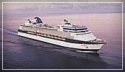
 Join us on this exciting Transatlantic cruise on Celebrity Cruises new renovated and 'Solsticized' ship, Celebrity Infinity
 ! You'll sail from Harwich, England to Miami, Florida and experience several relaxing days at sea to explore this wonderful liner with your new Pied Piper friends. ! You'll sail from Harwich, England to Miami, Florida and experience several relaxing days at sea to explore this wonderful liner with your new Pied Piper friends.
Cross the Atlantic in a style that says you've arrived
Your sanctuary floats on water as you cross the great Atlantic Ocean on your way from exciting European destinations.
Enjoy contemporary luxuries on your way to or from the Old World with day-long spa treatments. Feast on gourmet meals in our inspired restaurants. And have every whim catered to with a staff of nearly one crew member to every two guests.

Celebrity's Infinity
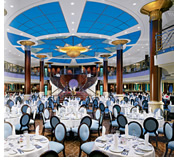 Celebrity Infinity will sail with a new sense of style and excitement. A popular member of Celebrity's fleet, after a spectacular refurbishment in December 2011 emerge with AquaClass accommodations including the Mediterranean-themed Blu specialty restaurant. She got the hip Celebrity iLounge where you can participate in the iLearn enrichment series or pick up the latest high-tech wonder from the first Apple Reseller at Sea. And get ready to have a unique, memorable dinner at the innovative QsineSM restaurant, where you order from an iPad. Finish with a chilled Peartini at the ice-topped Martini Bar. Plus more staterooms, more verandas, an expanded art collection, and completely new décor throughout. There's going to be a new way to get away and make the most of your precious vacation days. Celebrity Infinity will sail with a new sense of style and excitement. A popular member of Celebrity's fleet, after a spectacular refurbishment in December 2011 emerge with AquaClass accommodations including the Mediterranean-themed Blu specialty restaurant. She got the hip Celebrity iLounge where you can participate in the iLearn enrichment series or pick up the latest high-tech wonder from the first Apple Reseller at Sea. And get ready to have a unique, memorable dinner at the innovative QsineSM restaurant, where you order from an iPad. Finish with a chilled Peartini at the ice-topped Martini Bar. Plus more staterooms, more verandas, an expanded art collection, and completely new décor throughout. There's going to be a new way to get away and make the most of your precious vacation days.
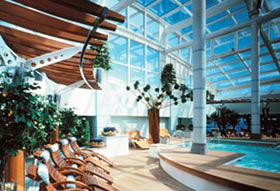
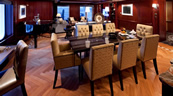
A sumptuous, world-class meal. A theatrical extravaganza reminiscent of the best on Broadway. Cocktails in a piano bar at midnight, breakfast overlooking the sea at sunrise. Each and every one is a reality on Infinity. A member of Celebrity's Millennium class of ships, Infinity is steeped with prestige and elegance. Dressed in polished marble, warm woods and etched glass, Infinity consistently makes a long-lasting, luxurious impression.

Harwich, England
 Located just 69 miles from London, Harwich is one of England's busiest coastal towns. Here you'll discover many historic buildings, picturesque lighthouses, a quaint beach, and the Redoubt Fort, dating all the way back to Napoleonic the era. Located just 69 miles from London, Harwich is one of England's busiest coastal towns. Here you'll discover many historic buildings, picturesque lighthouses, a quaint beach, and the Redoubt Fort, dating all the way back to Napoleonic the era.
Harwich lies at the junction of two estuaries and the area forms one of the UK's major harbours (although most freight shipping actually operates from Felixstowe, a short distance over the water, rather than from Harwich itself). Ferries to northern Europe operate from adjacent Parkeston, while there are fast rail and road links to London.
Local attractions include two lighthouses; the Electric Palace cinema, one of the oldest in Britain and now restored to its original state; the Redoubt fort, dating from the Napoleonic era; a lighthouse museum; a small beach; and of course ship-watching. Many attractions are open during the summer only.
La Rochelle, France
 Known as La Ville Blanche ('the white city'), La Rochelle's luminous limestone façades are topped by 14th- and 15th-century towers glowing white in the bright coastal sunlight. Known as La Ville Blanche ('the white city'), La Rochelle's luminous limestone façades are topped by 14th- and 15th-century towers glowing white in the bright coastal sunlight.
The arcaded walkways; half-timbered houses protected from the salt air by slate tiles; and ghoulish protruding gargoyles are rich reminders of La Rochelle's seafaring past. One of France's foremost seaports from the 14th to 17th centuries, early French settlers in Canada, including the founders of Montreal, set sail from here in the 17th century. La Rochelle's cobblestone streets are fashioned in part by ships' ballast brought back across the Atlantic.
La Rochelle might be called the white city, but it's also commendably green, with innovative public transport and open spaces. It's kid-friendly too, with lots of activities for little visitors.
Southwest of the old city, the late 20th-century district of Les Minimes was built on reclaimed land, and now has one of the largest marinas in the country. Unlike the Med with its motor cruisers, the 3500 moorings here are mostly used by yachts that fill the harbour with billowing spinnakers.
Gijon, Spain
 Gijon, with almost 300 000 inhabitants, is the capital of the "Costa Verde". Gijon is a modern city with every single facility needed. The wide range of hotels, restaurants & shopping facilities is mainly in the city-centre, by Corrida Street.
In addition to being the main city in Asturias, Gijon has the largest concentration of industries, backed up by the outer harbour "El Musel", one of the busiest in Spain. One of the most important tourist resources is San Lorenzo Beach, with a 3 mile-long promenade. The Marina, with its modern installs is also a must-see. But there are even more beaches in Gijon: Arbeyal, Poniente... There are lots of typical little towns around Gijon: green valleys, beautiful meadows... Both in the center and outskirts you can find spots to relax as Isabel la Catolica Park or Monte de Deva. Gijon is the perfect place to have a lot of fun. Festivities in the city take place all through the year as "Antroxu" (Carnival)... but there are even more things going on during summer-time: "Semana Negra", "International Film Festival", "Day of Asturias", "Fiestas de Begona", "International Trade Fair of Asturias", concerts, parades, sporting events, cultural activities... All this makes Gijon unforgettable and makes you want to come back again.
Vigo, Spain
 El Sireno, a gilded sculpture depicting a figure that is halfman, half sea creature, towers over the city's lovely gardens and well-preserved historical buildings. The legendary black salts offshore on the Islas Cies are said to bring good health. Catholic pilgrims flock to the nearby sacred cathedral of Santiago de Compostela, built over the burial spot of St. James. El Sireno, a gilded sculpture depicting a figure that is halfman, half sea creature, towers over the city's lovely gardens and well-preserved historical buildings. The legendary black salts offshore on the Islas Cies are said to bring good health. Catholic pilgrims flock to the nearby sacred cathedral of Santiago de Compostela, built over the burial spot of St. James.
The city of Vigo, with
a growing population almost 300,000, is situated on
the slopes of Monte del Castro in the northwestern
Spanish province of Galicia. Its modern seaport is
located 9 miles from the southern shore of Vigo
Bay. Vigo Bay is 20 miles long and 3 miles wide
with very deep water, and it is said to be sufficiently
large to hold the combined fleets of the world.
The entrance of Vigo estuary is guarded by the
mythical Cies Islands, which are steep and abrupt,
but have magnificent beaches and the remains of
an ancient Celtic culture. The climate is modified
by the sea, and the tides of the Atlantic reach far
into the estuary creating a mild climate with few
extremes of temperature, in fact, oranges are grown
along the Vigo inlet. One of the wettest and greenest
of Spanish provinces, Galicia is sometimes called
the "Wales of Spain".
 This old picturesque city is typical for the Galicia
area. For visitors from the sea, Vigo is the gateway
to the spectacular scenery of the northern Spanish
countryside. Visitors have access to the fascinating
towns of Santiago de Compostela, Valenca Do
Minho, La Toja, and Bayona. As you explore this
region, it will continue to reveal its fascinating
lifestyle, history and marvelous landscapes. This old picturesque city is typical for the Galicia
area. For visitors from the sea, Vigo is the gateway
to the spectacular scenery of the northern Spanish
countryside. Visitors have access to the fascinating
towns of Santiago de Compostela, Valenca Do
Minho, La Toja, and Bayona. As you explore this
region, it will continue to reveal its fascinating
lifestyle, history and marvelous landscapes.
The Citadel, called El Castro, was built by Philip IV and
was one of three forts that guarded the town. Today a park from
which there is a wonderful view of the city, the bay and distant
communities, surrounds it. The fortress is located on a hill at
the top of the City above the Port.
Castrelos Palace is an ancient building that has been
converted into a museum where paintings and Roman treasures
are kept. It is also the residence of the Head of State when
visiting Vigo. The palace is located in the western section of
Vigo, close to Quinones de Leon Park.
Ribera del Berbes is the fishing quarter across from the
Port. During the reign of Philip IV this was the main city.
Within a few minutes walk of the Ship's berth, it is a favorite
spot for tourists to explore and enjoy the fresh seafood at the
picturesque out-door cafes.
Lisbon, Portugal
 See why this city stands out above all others as you stroll along elaborate mosaic sidewalks and pass by the Monument to the Discoveries. A quick trolley ride transports you to the cobblestone district of Baixa. Or be lured away and pampered in the resort cities of Cascais and Estoril. See why this city stands out above all others as you stroll along elaborate mosaic sidewalks and pass by the Monument to the Discoveries. A quick trolley ride transports you to the cobblestone district of Baixa. Or be lured away and pampered in the resort cities of Cascais and Estoril.
Lisbon, the capital of Portugal, is situated on a range of low hills at the estuary of the River Tagus (Tejo) and is approximately 6 miles from the Atlantic Ocean. It is both the western-most and one of the oldest capital cities of Europe, with a population of just over a half million inhabitants. Cruise ships enter the River Tagus from the Atlantic, following the course of Portuguese master navigators as well as that of Christopher Columbus. With sprawling suburbs on both banks of the river, central Lisbon faces out into a vast bay, named 'Mar da Palha' or 'Sea of Straw', this lined with industry and ship yards attesting to ancient ties with the sea
In 1986 Portugal joined the European Economic Community (Common Market), which brought new investment funds and products to Lisbon and this, in turn, greatly improved the economy. It is now a lively international city with pedestrian malls, shopping centers, open-air cafes, restaurants and new hotels. Tourism has become a flourishing business, as visitors come to explore the unique historical past of this beautiful city, and to enjoy the nearby cosmopolitan beach resorts of Estoril, Cascais and the surrounding countryside.
 Castle of St.George (Castelo de Sao Jorge) stands on the hill where it is believed the original Phoenician colony was established. The Romans built the first defensive walls here, but little evidence of this remains. The present castle was built in the 12th century and was dedicated to St. George in the 14th century. It is a very impressive building with 10 towers, linked by massive battlements. There are wonderful views of Lisbon from the Castle, one of the few structures to survive the 1755 earthquake. Situated on Rua Costa do Castel. Castle of St.George (Castelo de Sao Jorge) stands on the hill where it is believed the original Phoenician colony was established. The Romans built the first defensive walls here, but little evidence of this remains. The present castle was built in the 12th century and was dedicated to St. George in the 14th century. It is a very impressive building with 10 towers, linked by massive battlements. There are wonderful views of Lisbon from the Castle, one of the few structures to survive the 1755 earthquake. Situated on Rua Costa do Castel.
Alfama is the oldest quarter in Lisbon and is situated on the slopes below St. George's Castle. It is a labyrinth of narrow streets and alleys, and is considered by many to be one of the most colorful spots in the City and the popular site of Fado music. Although some medieval mansions and Moorish buildings survived the great earthquake, most of the houses date from the 18th century.
Lisbon Cathedral
(Sé), located on Largo da Sé, dates from the 12th century and is Lisbon's oldest church. It suffered much earthquake damage in 1755, but was rebuilt in the 18th century. It is of a solid, massive construction with battlements and towers. Inside is the baptismal font of St. Anthony of Padua (Portugal's Patron Saint who was born in Lisbon), and also in the Cathedral are the relics of St. Vincent, the City's Patron Saint.
Nassau, Bahamas
 Long after you return home, you'll continue to hear the sweet reverberations of Bahamian steel drums, their carefree melodies transporting you to a place where you're perpetually on vacation. They'll provide a constant and pleasant reminder of the sophisticated dining and shopping, as well as the shallow warm waters gently lapping at your feet. Long after you return home, you'll continue to hear the sweet reverberations of Bahamian steel drums, their carefree melodies transporting you to a place where you're perpetually on vacation. They'll provide a constant and pleasant reminder of the sophisticated dining and shopping, as well as the shallow warm waters gently lapping at your feet.
In 1684 the Spanish sailed into a protected cove on the north coast of the island of New Providence. They came ashore and entered the small village of Charles Town. There was not much to see, however the settlement was English so the Spanish burned it to the ground then promptly sailed away. The village was slowly rebuilt and in 1695 it was renamed in honor of English King William III of the protestant Dutch House of Orange – Nassau. The small town was strategically located near some of the busiest waters in the New World…which was quite advantageous…for pirates.
 By the early 1700s Thomas Barrow and Benjamin Hornigold were two of the most notorious pirates in the West Indies. They had established Nassau as their "Pirate Republic". This declaration attracted from throughout the Caribbean and the Americas every cut-throat sailor that ever craved the excitement and rewards that only a life of pillage and plunder can bring. The town was under the control of pirates to such an extent that the magistrate was a man by the name of Edward Teach…the notorious Blackbeard. The English Crown was forced to act. Nassau had to be retaken. By the early 1700s Thomas Barrow and Benjamin Hornigold were two of the most notorious pirates in the West Indies. They had established Nassau as their "Pirate Republic". This declaration attracted from throughout the Caribbean and the Americas every cut-throat sailor that ever craved the excitement and rewards that only a life of pillage and plunder can bring. The town was under the control of pirates to such an extent that the magistrate was a man by the name of Edward Teach…the notorious Blackbeard. The English Crown was forced to act. Nassau had to be retaken.
Captain Woodes Rogers was appointed by King George I as Governor General of Nassau and the Bahamas. His mission was to pardon, capture, kill or drive out the pirates in Nassau. This was a clever move on the part of the King, for Woodes Rogers was himself a pirate. By stringing them from the nearest yardarm, hanging them in irons and public floggings (not to mention the presence of four mighty English ships of war) Nassau was cleared of buccaneers. This was only the beginning of the town's colorful history.
Today as the capital of the Bahamas, Nassau welcomes visitors from all over the world.
Miami, Florida
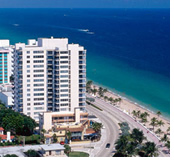 The beauty of South Beach's art deco architecture and sparkling beaches are set against a rich backdrop provided by the flavor of the Latin community. Come nightfall, Miami doesn't merely go out, it enthusiastically celebrates the onset of every evening with a passion that you'll find contagious. The beauty of South Beach's art deco architecture and sparkling beaches are set against a rich backdrop provided by the flavor of the Latin community. Come nightfall, Miami doesn't merely go out, it enthusiastically celebrates the onset of every evening with a passion that you'll find contagious.
The city of Miami is a young metropolis known for its beautiful beaches, exciting club scene and Latin American cultural influence. Miami-Dade County has a population of approximately 2.5 million. The area has grown immensely since its founding in 1897 due to immigration and an influx of American "snowbirds" escaping cold northern climates. While some follow the heavy music beats of the South Beach nightlife, others are drawn to the city's relaxed sub-tropical lifestyle. Evidenced in its politics, culture, and attractions, Miami is the gateway to the Florida Keys and the Caribbean and Latin America.
Miami, meaning "big river," is named for the river that runs through the heart of the city. It has played an influential role in the Miami's history. The Tequesta Indians originally inhabited the area. Oil tycoon, railroad baron and developer Henry Flagler extended his Florida East Coast Railway down to what was at the time an unincorporated little village. He promptly went to work building Miami.
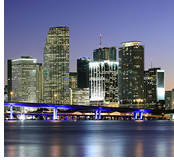 South Florida's subtropical climate and environment are a huge attraction for scientists, nature lovers, and outdoor enthusiasts. To say that Miami is a sports crazy town would be a bit of an understatement. The city has hosted the annual Orange Bowl football game since 1937. The Hurricanes of the University of Miami have won many national championships in football and baseball. The Miami Dolphins still proudly boast of their 1972 "perfect season". The young Florida Marlins have already won the World Series, the Miami Heat has won the NBA Championship and the Florida Panthers have brought home professional hockey's coveted Stanley Cup. South Florida's subtropical climate and environment are a huge attraction for scientists, nature lovers, and outdoor enthusiasts. To say that Miami is a sports crazy town would be a bit of an understatement. The city has hosted the annual Orange Bowl football game since 1937. The Hurricanes of the University of Miami have won many national championships in football and baseball. The Miami Dolphins still proudly boast of their 1972 "perfect season". The young Florida Marlins have already won the World Series, the Miami Heat has won the NBA Championship and the Florida Panthers have brought home professional hockey's coveted Stanley Cup.
Since its beginnings as a Spanish colonial outpost Miami has retained its Latin flavor in its demographics, culinary scene, and cultural traditions. Miami's connections with the Caribbean, especially Cuba, date back to the days of pirate attacks on colonial merchant ships leaving the Americas. The stories of ship wrecks and buried treasure, both lost and found, have become imbedded in South Florida lore. Pirates, rum runners and the "Miami Vice" image of speed spiced with beauty, a touch of danger and intrigue to the music of a steamy Latin beat all come together to make one of the youngest cities in America one of the most exciting.
 |








 Your one-stop-spot at sea to find all the latest high-tech electronics including iPad® and iPod® mobile digital devices, MacBook® computers, a variety of laptops, digital accessories, and cool electronic toys. Best of all, whatever you purchase at the Innovations Store is duty-free.
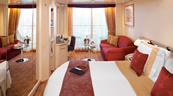
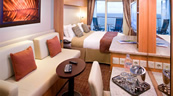
 Spa-inspired staterooms featuring indulgent amenities like a Hansgrohe® shower tower and custom blended bath products to help you feel restored and renewed. An AquaClass® Spa Concierge to help you arrange all your spa appointments. Complimentary access to our relaxing Persian Garden. Plus, exclusive access to the Blu restaurant serving breakfast and dinner.
 A refreshingly indulgent menu of "clean cuisine" provides an exclusive dining sanctuary exclusively for AquaClass® guests. A lighter take on your favorites, Blu features inventive dishes with fresh, crisp flavors in a sophisticated atmosphere. Open for breakfast and dinner.
 Discover the state of complete tranquility in one of the largest, most luxurious spas afloat. The AquaSpa® offers an array of treatments designed to take you to a higher level of relaxation. Working closely with
  Qsine®, our one-of-a-kind specialty restaurant, features a uniquely unordinarySM approach to dining. At Qsine®, we strive to awaken your palate through a modern and whimsical approach to familiar dishes from around the world. Food is artfully presented, without traditional courses, and intended to be shared. And, to make it even more playful, the menu and wine list are creatively presented on an iPad®. Let your Culinary Tour Guide take you on an unforgettable journey.
 Keep in touch 24 hours a day in the Celebrity iLounge, our one-of-a-kind hip Internet lounge that is the first Authorized Apple® Reseller at Sea. Celebrity iLounge also offers various iLearn classes to help you master the latest photography, video and audio skills.