|
Greek Isles and Turkey on Celebrity Reflection
10 nights roundtrip cruise from /to Civitavecchia (Rome), Italy
July 19–29, 2013
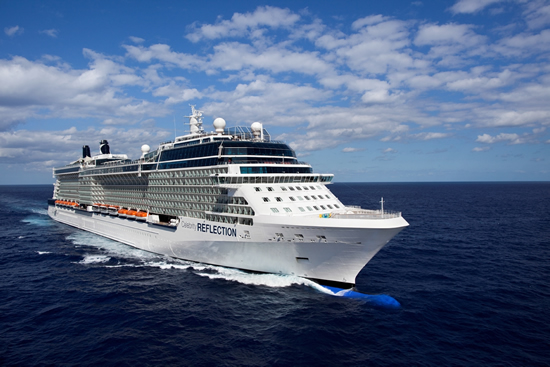
Celebrity's Reflection
 Pied Piper once again offers its popular cruise to the Greek Isles and Turkey
 on the ultra stylish new ship, Celebrity Reflection on the ultra stylish new ship, Celebrity Reflection ! A journey to this sun-drenched part of the Mediterranean is an unforgettable mix of ancient culture and contemporary relaxed society. The beauty of the region is undeniable. ! A journey to this sun-drenched part of the Mediterranean is an unforgettable mix of ancient culture and contemporary relaxed society. The beauty of the region is undeniable. On this Pied Piper gay group cruise, you will sail round trip out of Civitavecchia (Rome) Italy through the calm and cerulean blue waters of the Mediterranean visiting the romantic and picturesque islands of Sicily, Santorini and gay friendly Mykonos. Join us on this cruise into ancient history in modern comfort.
All this is yours while you are pampered with gracious service, gourmet dining, and numerous venues for entertainment on the brand new and most up-to-date luxury cruise ship. 

Celebrity's Reflection
 Get ready for Celebrity Reflection, when the best of Solstice Class gets even better. She'll offer the first-ever AquaClass Suites, and a variety of exciting new venues - an outdoor, interactive grill restaurant, a craft beer bar, cabana-style havens and so much more. Get ready for Celebrity Reflection, when the best of Solstice Class gets even better. She'll offer the first-ever AquaClass Suites, and a variety of exciting new venues - an outdoor, interactive grill restaurant, a craft beer bar, cabana-style havens and so much more.
Since Celebrity Reflection completed the Solstice Class in 2012, you have another spectacular choice for cruising. Relax like never before in one of the 34 new AquaClass Suites with 251 sq. ft. of luxurious interior space and stunning 57-sq.ft. verandas. All your favorite spa amenities and access to the highly-rated specialty restaurant, Blu, are included. There are even more inspired additions to this ship. Celebrity Reflection has expanded with an additional deck, 72 additional staterooms overall, and more seating in the main and specialty dining rooms, more sun loungers on the pool deck and more seats in theater.
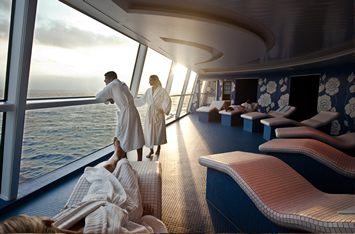
Excitement brews with up to 50 international craft beers in the enhanced Michael's Club. Celebrate the flavorful joys of outdoor grilling in the new Lawn Club Grill. Unwind in your own cabana-styled haven, The Alcoves, on the Lawn Club. And check out all the new spa innovations in the enhanced AquaSpa by Elemis. Go on a culinary adventure in Qsine where you order from an iPad menu. Your vacation time is precious. Your time aboard Celebrity Reflection will make the most of it.
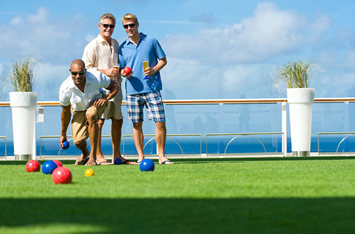
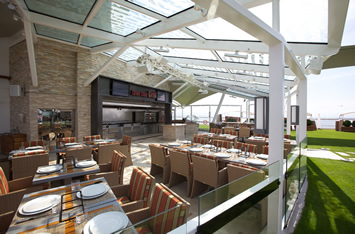
In the evenings, the Reflection offers an impressive array of evening entertainment. Take in a fabulous production in the Reflection Theatre, enjoy a late-night comedy show at Celebrity Central or explore the ship's bars and lounges, each with its own unique atmosphere. One of the ship's most interesting features is The Lawn Club that boasts a freshly manicured lawn of real grass and casual outdoor activities. Overlooking this park-like area is the Patio on the Lawn, which is the perfect place for relaxing with a good book and cup of gourmet coffee.
Rome (Civitavecchia), Italy
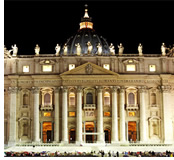 Once the center of the ancient world from which emperors ruled over nearly all of western civilization for hundreds of years, Rome is still considered by many to reign over all other European destinations. Here you can breathe the air once breathed by great Roman gladiators in the ancient halls of the Colosseum. Gaze upon the very ceilings Michelangelo painted at the Sistine Chapel. Or visit a monument to both size and faith, St. Peter's Basilica, the largest church ever built. Once the center of the ancient world from which emperors ruled over nearly all of western civilization for hundreds of years, Rome is still considered by many to reign over all other European destinations. Here you can breathe the air once breathed by great Roman gladiators in the ancient halls of the Colosseum. Gaze upon the very ceilings Michelangelo painted at the Sistine Chapel. Or visit a monument to both size and faith, St. Peter's Basilica, the largest church ever built.
Colosseum
Completed 80 A.D., the circus was home to centuries of gladiatorial combats and featured 76 numbered entrances, marble seats and subterranean passages, where animals and apparatus were kept. The arena floor could be flooded to host naval combats.
Roman Forum
The ruins of the forum stand in mute testimony to what Byron described as the "grandeur that was Rome".
Sistine Chapel
The gem of the Vatican Museum is the celebrated chapel that is home to Michelangelo's frescoes 'The Creation' and 'The Last Judgement'.
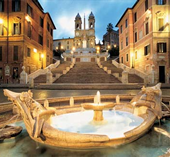 Spanish Steps Spanish Steps
The heart of Rome's old Bohemian Quarter (Keats and Shelley lived nearby), the steps take their name from the 16th century Spanish Embassy to the Holy Sea. Today the area surrounding Piazza Espagna is the city's chic shopping district.
St.Peter's Basilica
By far the largest church in the world, St. Peter's Basilica took more than 100 years to build. Some of the greatest figures of the Renaissance were employed in its creation, from Bramante and Bernini to Michelangelo and Raphael.
Trevi Fountain
Blue-green water cascades over the Baroque figures of Rome's most famous fountain. Follow custom and toss a coin into the fountain, a gesture that insures your return to the Eternal City.
Vatican City
The spiritual and administrative centre of Roman Catholicism is also one of the smallest independent states in the world. The Vatican mints its own coins, prints its own stamps, and maintains its own army of Swiss Guards.
Sicily, Italy (Messina)
 Located in northeastern Sicily on the slopes of the Peloritani Mountains, Messina is an ancient place with a fascinating history. Walk by the ruins of the Santa Maria Alemanna Church, built in 1220 A.D. You'll also want to see the Duomo, a Romanesque and Norman cathedral that includes a display of artifacts in its treasury. Located in northeastern Sicily on the slopes of the Peloritani Mountains, Messina is an ancient place with a fascinating history. Walk by the ruins of the Santa Maria Alemanna Church, built in 1220 A.D. You'll also want to see the Duomo, a Romanesque and Norman cathedral that includes a display of artifacts in its treasury.
Located in northeastern Sicily on the slopes of the Peloritani Mountains, Messina is an ancient place with a fascinating history. Walk by the ruins of the Santa Maria Alemanna Church, built in 1220 A.D. You'll also want to see the Duomo, a Romanesque and Norman cathedral that includes a display of artifacts in its treasury.
A mountainous and rugged island, the highest
point on Sicily is Mount Etna, an active volcano
which dominates the eastern coast at a height
of 10,902 feet. Sicily is mainly an agricultural
land with citrus fruits, olives, vegetables and
grapes as the main crops. However, some industry
has developed, mainly in the form of oil
refineries and chemical plants while fishing is
still important, accounting for 25% of Italy's annual
seafood catch.
 Cathedral Cathedral
Cathedral destroyed in the 1908 earthquake and damaged during the
War, has now been handsomely reconstructed along its original 11th century
lines. The Astronomical Clock, housed in the Bell Tower of the Cathedral,
is one of Messina's most unusual features. At 11:55 am the mechanism is
activated and various figures and evangelical scenes move through the 15
minute cycle.
Annunziata dei Catalani Church
Annunziata dei Catalani Church is located two streets east
of the Cathedral. Of Norman construction, from the 12th century, it is an
original Crusader's church and is believed to have been used by Richard
the Lionheart.
National Museum
National Museum is located on Viale della Liberta, approximately
11/2 miles from the Pier. This lovely little museum houses some fine, ancient
artifacts, and a good collection of renaissance paintings. Well worth
a visit.
Athens (Piraeus), Greece
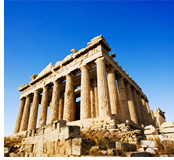 Your adventure in Athens begins five miles southwest in Greece's largest seaport, known as Piraeus. While here, be sure to take notice of what is considered to be one of the greatest contributions from the ancient Age of Pericles, the city's infrastructure, which today we know as a city block. Your adventure in Athens begins five miles southwest in Greece's largest seaport, known as Piraeus. While here, be sure to take notice of what is considered to be one of the greatest contributions from the ancient Age of Pericles, the city's infrastructure, which today we know as a city block.
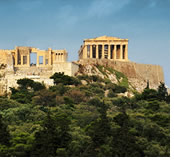
Acropolis
The Acropolis is the heart of classical Athens and the site of the Parthenon, the Propylea, the Temple of Athena Nike (or Wingless Victory), the Erectheion, and the Acropolis Museum.
Ancient Corinth
Once the wealthiest and wickedest city in Greece, Corinth was evangelized by St Paul in the 1st century.
 Corinth Canal Corinth Canal
This 19th-century engineering marvel bisects the Peloponnesian peninsula and connects the Aegean and Ionian Seas.
Delphi
Perched on the slopes of Mt Parnassus, the temple complex was home to the ancient world's most revered prophetess.
National Archaeological Museum
The museum boasts important archaeological finds from all over Greece.
Old Olympic Stadium
The site for archery competition and the finish of the marathon in the 2004 Olympics, the stadium originally hosted the first modern Olympics in 1896.
Ephesus (Kusadasi), Turkey
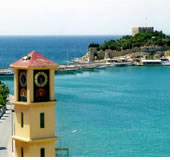
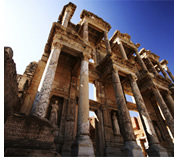 Nestled along the craggy shores of the Aegean Sea is the Turkish port of Kusadasi. Renowned as one of the most beautiful cities along the Aegean, Kusadasi is blessed with sunshine an average of 300 days a year. This beautiful city is the perfect setting to begin your journey to Ephesus. Nestled along the craggy shores of the Aegean Sea is the Turkish port of Kusadasi. Renowned as one of the most beautiful cities along the Aegean, Kusadasi is blessed with sunshine an average of 300 days a year. This beautiful city is the perfect setting to begin your journey to Ephesus.
Ephesus
The Magnesia Gate entrance leads to a downhill, marble-paved road into the ruins of this Roman provincial capital and continues past the Odeum, the Celsus Library, the Temple of Hadrian, the Fountain of Trajan and the Great Theatre. The theatre had seating for 25,000, and is the site where St. Paul preached to the Ephesians.
Basilica of St.John
Built by the Emperor Justinian over the tomb of St. John the Apostle, the Basilica, now in ruins, apart from a number of graceful columns and colourful mosaics, once rivaled St. Sophia in size.
House of the Virgin Mary
The Vatican has recognised this small house in the Solmissos Mountains as the final resting place of the Virgin Mary. A small shrine dedicated to St. Mary was found when the ruins of the house were first discovered.
 Ephesus Museum Ephesus Museum
This small museum in Selcuk boasts an incredible collection of Hellenistic and Roman statues, carved reliefs and artifacts unearthed from the ruins of Ephesus.
St.Mary's Church
Located inside Ephesus, the church was used for the education of the Ephesian priests and is believed to be the first church dedicated to the Virgin Mary in the World. The Third Ecumenical Council was held in this building in 431 A.D.
Miletus
These ancient ruins lie on a hill near the Aegean Sea and feature an ancient theatre, built around 4th-century B.C. to accommodate over 15,000 spectators along with the well-preserved Bath of Faustina, named after the wife of Marcus Aurelius, who ordered their construction.
Didyma
The entrance to the Temple of Apollo, one of the largest temples from the Helenistic Period, is marked by a marble Persian lion. A grand stairway leads to 103 remarkably well-preserved Ionian columns, some still stretching toward the heavens. The colossal scale of the monument, intended to dwarf the pilgrim, placed man in an inferior relationship with the gods.
Rhodes, Greece
 Rhodes, the friendliest city in the Mediterranean, is situated at the island's northernmost point. This sunny retreat is also home to many historic sites, such as the ruins of the Temple of Venus and the medieval Street of Knights. Rhodes, the friendliest city in the Mediterranean, is situated at the island's northernmost point. This sunny retreat is also home to many historic sites, such as the ruins of the Temple of Venus and the medieval Street of Knights.
The undisputed tourist capital of the Dodecanese, the island of Rhodes offers sandy beaches, jagged cliffs, and lush mountaintops. This, along with the medieval
flavor of its capital, Rhodes Town, is what attracts visitors to it shores. At 540 square miles (1400 square kilometers), Rhodes is the fourth largest Greek island.
The island's history is what adds to its appeal. Comparatively closer to mainland Turkey than Greece, Rhodes has a flavor all its own. It is
thought that the Greeks erected the Colossus of Rhodes, one of the Seven Wonders of the Ancient World, in the town's old harbor. Two thousand years later the Knights of the Order of St. John of Jerusalem fortified the city, protecting its inhabitants from Turkish invaders.
The town of Rhodes is divided into two distinct districts; the New Town to the north and west, and the Old Town, surrounded by medieval fortress walls. Almost everything of interest in Rhodes Town lies within these walls and its network of pedestrian streets and ancient alleyways is home to a host of souvenir shops, gold smiths, and small cafes.
Beyond Rhodes Town are some of the resorts and beaches that attract the thousands of European sun seekers who visit the island each year. Also of interest is the ancient city of Lindos, its hilltop setting and whitewashed buildings among the most attractive, and historic, on the island.
 Hospital of the Knights Hospital of the Knights
The Hospital of the Knights now houses the Archaeological Museum. Located on Museum Square, the hospital, completed in 1489, is the largest of the Knight's public buildings. The imposing façade opens into a courtyard, where one will find cannonballs from the siege of 1522. The Museum contains a collection of ancient pottery and sculpture, including two well-known representations of Aphrodite.
Palace of the Knights of St. John
The Palace of the Knights of St. John is located at Kleovaulou Square. Also known as the Palace of the Grand Masters; it has 300 rooms, a moat, drawbridges, watch towers and colossal battlements. Items on exhibit include coins, illuminated manuscripts, icons, sculptures, and mosaics.
Mosque of Suleyman
The Mosque of Suleyman is an early 19th-century structure that stands on the site of the original mosque built in 1522. The original mosque was built immediately after Sultan Suleyman the Magnificent captured Rhodes. The current landmark has red-plastered walls, a garden and a stone minaret
Temple of Aphrodite
The Temple of Aphrodite is one of two pre-Roman sites in the area. This temple was completed in the 3rd-century BC and stands inside the old town near Symi Square.
Platia Martyron Evreo
Square of the Jewish Martyrs - is in the heart of the old Jewish Quarter. In 1943, 2000 Jews were taken from this square to Nazi concentration camps; only 50 survived. Further down Dossiadou Street at Simiou Street, stands the synagogue restored by survivors of the war.
Santorini, Greece
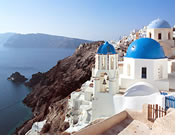
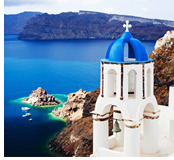 35.25 degrees north. 25.20 degrees east. Perfection has coordinates. Here on Santorini, you'll find whitewashed houses accented by roofs of the bluest blue - there's no doubt that azure waters of the Aegean have served as creative inspiration. Among the many historic sites on the island is the ancient city of Akrotiri, once buried under a thick blanket of volcanic ash over 3,600 years ago. 35.25 degrees north. 25.20 degrees east. Perfection has coordinates. Here on Santorini, you'll find whitewashed houses accented by roofs of the bluest blue - there's no doubt that azure waters of the Aegean have served as creative inspiration. Among the many historic sites on the island is the ancient city of Akrotiri, once buried under a thick blanket of volcanic ash over 3,600 years ago.
Known as the "Black Pearl of the Aegean," Santorini has one of the most dramatic backdrops of cliffs, sea and sky in the world. The island was not always crescent-shaped as it is today. A volcanic eruption during the Bronze Age caused the middle of this once-circular island to sink, leaving an enormous sea-filled crater flanked by mammoth cliffs. This cataclysmic event is the reason for many of the island's remarkable features -- from its black-sand beaches and exquisite wines, to its fascinating archeological sites.
The ship drops anchor off of Skala, which is 890 feet (270 m) below the small town of Fira (Thíra), the island's capital. It can be reached from Skala by cable car or climbing the more than 600 steps. Fira overlooks the caldera and the island of Nea Kameni.
Devastated by an earthquake in 1956, Fira was re-built, and engraved into the volcanic cliffs with domed churches and barrel- roofed cave houses. The terraces are packed with hotels, bars and restaurants. With a population of about 2000, it is the largest community
on the island.
 Akrotiri Akrotiri
Visit Akrotiri, where Minoan Pompey, a well-preserved archeological site from the Bronze Age, was excavated. This ancient city was covered in pumice when the island's volcano erupted. Some believe these ruins to be the lost city of Atlantis.
Santo Winery
Santorini's climate and volcanic soil allows for an exceptional grape-growing region. The Santo Winery sits at the peak of the cliff-like caldera and offers superb views.
Fira
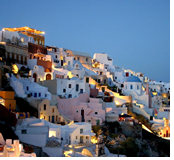
The largest town on Santorini is a cluster of whitewashed buildings clinging to volcanic cliffs and at sunset it could perhaps be the most beautiful place on Earth.
Mykonos, Greece
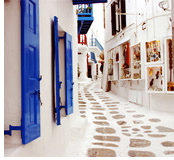 Few places in the world compare with Mykonos. Here you'll find whitewashed houses clinging to cliffs against a backdrop of indescribably blue sea. Follow a maze of tiny streets, visit one of the world's most superb beaches, or see the mythical birthplace of Apollo, the island of Mykonos. Few places in the world compare with Mykonos. Here you'll find whitewashed houses clinging to cliffs against a backdrop of indescribably blue sea. Follow a maze of tiny streets, visit one of the world's most superb beaches, or see the mythical birthplace of Apollo, the island of Mykonos.
Chora Village
Walk the labyrinth streets of traditional white-washed and beautiful churches and chapels. Visit the famous white-washed windmills for a fantastic view of the Little Venice.
The Islet Delos
One of the worlds leading archaeological sites which dates back to 3000BC and was the birthplace of the highly respected Greek God. Situated 2km to the west of Mykonos the whole island has been declared a national musuem.
The Church of Panagia Paraportiani
The most photographed of Mykonos' 250 churches is made up of four tiny-whitewashed churches and the main church, magnificent and asymmetrical.
Aegean Maritime Museum
Housing a collection of ships from the pre-Minoan period through to the 19th century.
Naples/Capri, Italy
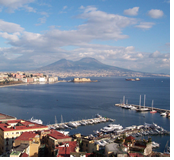 Located on the southern coast of Italy, Naples has spectacular scenery that attracts artists from around the world. From this key spot, you can embark on a trip to the ruins of Pompeii or shop the many boutiques of Sorrento. You may work up an appetite for one of Naples' greatest inventions - pizza - invented to honor the Queen of Italy in 1889. Located on the southern coast of Italy, Naples has spectacular scenery that attracts artists from around the world. From this key spot, you can embark on a trip to the ruins of Pompeii or shop the many boutiques of Sorrento. You may work up an appetite for one of Naples' greatest inventions - pizza - invented to honor the Queen of Italy in 1889.
Pompeii
The ancient Roman resort was buried in ash during the eruption of Mt. Vesuvius in 79 A.D.
Capri
This gem in the Bay of Naples has been a popular destination since the days of the Caesars.
Amalfi Coast
The Amalfi Coast, stretching from Sorrento to Salerno, is one of the most stunning coastal drives in the world.
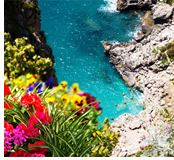 Positano Positano
Jumbles of whitewashed and pastel-coloured houses make this one of the most photogenic villages on the Amalfi Coast.
Sorrento
Set along the cliff tops, the flower-filled town is the gateway to both Capri and the Amalfi Coast.
Villa San Michele
This lovely garden villa is found in Capri's village of Anacapri.
Herculaneum
Like Pompeii, Herculaneum was buried during the eruption of Vesuvius in 79 A.D.
 |









.gif)





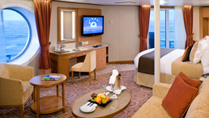
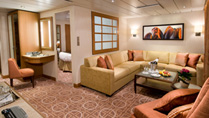
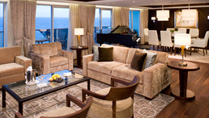
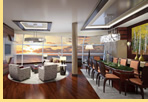 The Reflection Suite-our fleet's first two-bedroom suite-is located in a private area accessible only to guests carrying a special SeaPass card. You'll sleep on a premium Reverie Dream Sleep System mattress you can customize, experience the luxury of European-style butler service, and shower in a spectacular sea view bathroom with cantilever, all-glass shower.
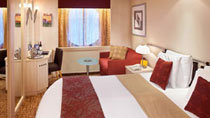
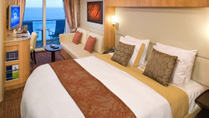
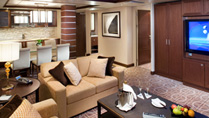
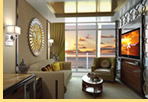 In a spacious Signature Suite, you'll relax in airy, high-ceiling rooms with floor-to-ceiling glass doors and windows, sleep on a premium Reverie Dream Sleep System mattress you can customize, enjoy the European-style butler service, and relax on a veranda with lounge seating. Located in a private area accessible only to guests carrying a special SeaPass card.
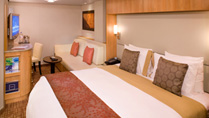
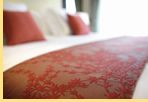 These 34 new AquaClass Suites cater to your love of the spa life. They include all your favorite spa and suite amenities along with priority access to an exclusive restaurant, Blu, featuring flavorful "clean cuisine." They also feature stunning 79 square foot verandas, so you can relax like never before.
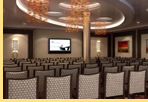 This multi-functional space serves as a spacious ballroom or conference area for weddings, business meetings, and cocktail parties. The full layout accommodates 220 guests, or it can be reconfigured for smaller groups. Our James Beard-featured culinary team offers traditional catering options or you can select from an array of pre-set, multi-course menus. Artful presentation is always on the menu.
 Hot and cold, wet and dry, peace and tranquility can be enjoyed in any order you like to help restore your balance and serenity. The unique circuit of sensory experiences includes an Infrared Sauna, Aromatic Steam Room, Cold Room, Sensory Showers, even a modern take on a traditional Hammam. New spa and salon services are also offered.
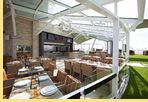 Fire up your culinary passion. The bright and modern Lawn Club Grill celebrates the flavorful joys of outdoor grilling. The highlight of dining at the Lawn Club Grill is the opportunity to serve as your party's "Grill Master," by being paired with a Celebrity chef to assist in preparing the menu for your table over custom-built, ventilated grills.
 Qsine is a uniquely unordinary experience with elements of surprise and delight. Our concept behind Qsine was to give you something you've never experienced before on land or sea. Leave any preconceived notions behind. Dig in and try new things. It's time your palate got a wakeup call. Our iPad menus are fun, interactive, and full of surprises.
 A cool, cabana-style private retreat on The Lawn Club for two to four guests. By day, filtered sunlight and breathtaking ocean views. By night, ambient lighting for drama and star status. A la carte foods and beverages arrive in picnic baskets. Alcoves are even equipped with Wi-Fi. Rental fee applies.
 Get creative. The Art Studio, our new venue on The Lawn Club, is home to two Master Artists from The ArtCenter/South Florida. They'll host interactive classes and hands-on demonstrations in jewelry making, beading, sketching, painting, even drink mixology, culinary lessons, taste tests and chef-prepared dinners.
 This intimate atmosphere features inviting leather chairs, perfect for sharing conversation, listening to a live guitarist, or savoring one of up to 50 international craft beer selections including ales, lagers, lambics, ciders, wheat beers, seasonal and beer cocktails. They're a complement to an extensive collection of fine whiskeys, scotches, cognacs and bourbons.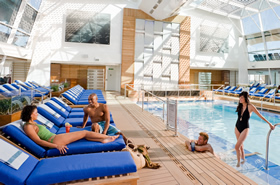

.jpg)